Why Most Budget Home Espresso Machines Fail (And What Actually Works for Real Cafe-Quality Coffee)
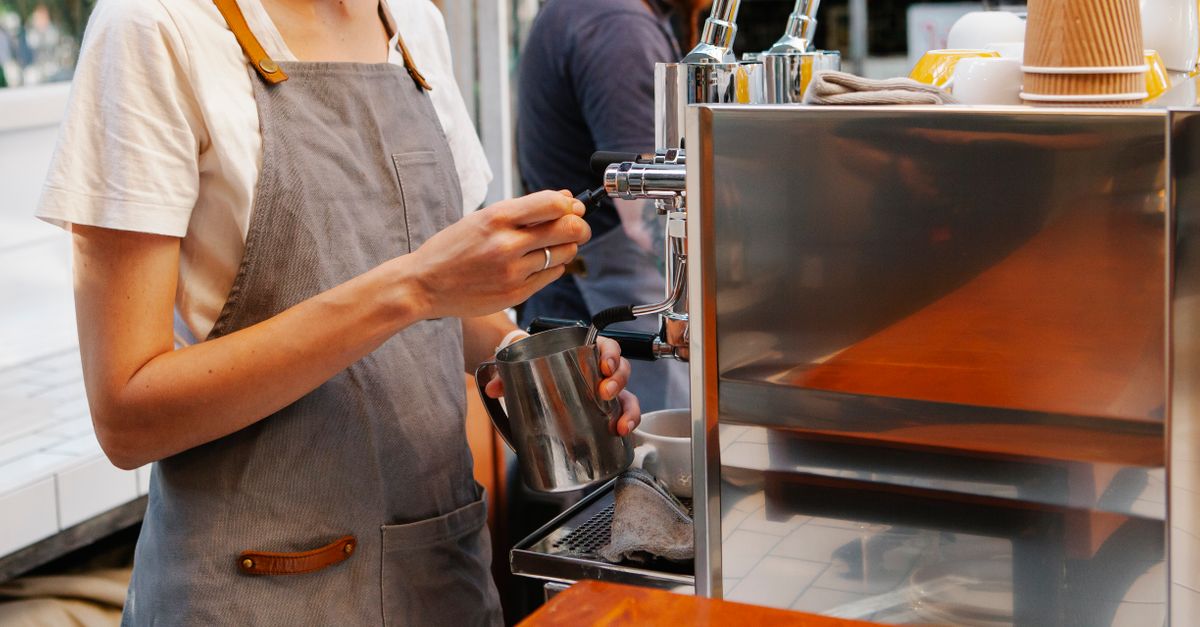
Don't fall for the allure of cheap home espresso. Eleanor Vance explains why most budget machines disappoint and what actually delivers cafe-quality coffee at home.
The dream is alluring: waking up, strolling into your kitchen, and pulling a rich, aromatic espresso shot that rivals your favorite cafe. For years, I chased that dream, convinced I could replicate it without breaking the bank. I meticulously researched ‘best budget espresso machines,’ watched countless YouTube reviews, and invested in what seemed like fantastic deals under $300. Every single time, I was met with disappointment, frustration, and ultimately, a return label.
I’ve been down that road of watery shots, inconsistent crema, and machines that clogged or broke down within months. The truth I’ve learned is this: most budget home espresso machines aren’t just ‘less good’; they fundamentally fail to deliver what you actually want from an espresso machine. They promise convenience and cafe-quality for a fraction of the price, but what they offer is often a lukewarm, bitter imitation that wastes your money and sours your morning ritual. My experience, after cycling through four different sub-$300 machines, is that these devices are designed to look like espresso machines, not to perform like them. They cut corners in the most critical areas, leading to a frustrating experience that ultimately pushes you back to your local barista or, worse, a less satisfying drip coffee.
It’s not about snobbery; it’s about understanding the physics and engineering required to make real espresso. When you try to shortchange those foundational requirements, the entire experience crumbles. What changed everything for me wasn’t spending thousands of dollars, but understanding where not to compromise, and how to invest strategically for genuine cafe-quality coffee at home.
Key Takeaways
- Most budget home espresso machines (<$300) fundamentally lack the consistent temperature and pressure needed for true espresso.
- Invest in a high-quality grinder first, as it’s the single most critical component for achieving cafe-quality espresso at home.
- Prioritize machines with a 9-bar pressure and a PID controller for stable temperature, even if it means a slightly higher initial cost.
- Embrace a semi-automatic machine and learn the basics; automation often sacrifices control and quality in budget models.
The Bitter Truth About Boiler and Thermoblock Systems
The heart of any espresso machine is its ability to heat water to a precise temperature and maintain it. This is where most budget machines stumble, often catastrophically. They typically use what are called thermoblock heating systems, or sometimes very small, inefficient boilers. While thermoblocks can heat up quickly, their temperature stability is notoriously poor. Imagine trying to bake a cake in an oven where the temperature fluctuates by 50 degrees every few minutes – you wouldn’t expect a good result, would you?
In my own experience, my first budget machine (a $150 model that looked sleek on the counter) would pull a shot that varied wildly in temperature. The first shot might be adequate, but any subsequent shot would be noticeably cooler, resulting in underdeveloped, sour espresso. This happens because the thermoblock doesn’t have enough thermal mass to recover quickly, especially if you’re steaming milk between shots. A proper espresso temperature range is incredibly narrow, usually between 195-205°F (90-96°C). Budget machines struggle to even hit this, let alone hold it consistently.
What you need is a stable heating system. This means either a larger, more robust boiler (which is rare in the budget category) or a thermoblock system with a PID controller. PID (Proportional-Integral-Derivative) controllers actively monitor and adjust the heating element to maintain a much tighter temperature range. While still not as robust as a dual-boiler or heat-exchange system, a PID-controlled thermoblock is a game-changer for consistency. My current machine, which cost around $600 but included a PID, delivered consistent shot temperatures from day one, a stark contrast to the wild swings of its cheaper predecessors. This feature is often the dividing line between ‘espresso-like coffee’ and ‘actual espresso.’
The Overlooked Power of a Quality Grinder
I made this mistake repeatedly: prioritizing the espresso machine itself over the grinder. In my defense, every review I watched focused on the machine, not the crucial tool that prepares the coffee. I started with a cheap blade grinder (the kind that chops beans, not grinds them), then upgraded to a $50 burr grinder, thinking I was making progress. Each time, my espresso was either underextracted (fast, watery shots) or overextracted (slow, bitter drips).
Here’s the harsh reality: a great espresso machine cannot compensate for a bad grinder, but a great grinder can make a mediocre machine perform significantly better. Espresso requires an incredibly fine, consistent grind. The particles need to be uniform in size so water can flow through the coffee bed evenly. Blade grinders are useless; they produce a mix of dust and boulders, leading to uneven extraction and terrible flavor. Cheap burr grinders (often ceramic or conical burrs that feel flimsy) might be better than blade grinders, but they lack the precision and consistency needed for espresso. Their adjustment steps are too coarse, meaning you can’t dial in the grind size precisely enough to hit that sweet spot for perfect extraction.
What truly changed my home espresso game was investing in a quality stepless conical burr grinder – a Baratza Encore ESP, to be specific, which I bought for around $200. This was more than any of my previous espresso machines! But the difference was night and day. Suddenly, I could make micro-adjustments to the grind size, transforming my espresso from frustratingly inconsistent to reliably delicious. The grinder became the most important piece of equipment in my setup, even more so than the machine itself. My advice: budget at least $150-$250 for a dedicated espresso grinder, even if it means spending less on the machine initially. It’s the foundation of good espresso, and cutting corners here is a guaranteed recipe for disappointment.
Pressure: The 9-Bar Myth and Its Practical Reality
Many budget machines proudly advertise 15 or even 20 bars of pressure. This is a common marketing ploy designed to impress inexperienced buyers. The truth? Real espresso is brewed at 9 bars of pressure. Anything significantly higher than that (especially 15 bars or more) will typically overextract the coffee, leading to bitterness and a burnt taste. Most commercial and high-end home machines are set to deliver exactly 9 bars of pressure for a reason.
The problem with budget machines is twofold: first, they often use vibratory pumps that can produce high pressure, but struggle to regulate it consistently at the optimal 9 bars. Second, without proper pre-infusion and pressure profiling capabilities (which are absent in this price range), simply blasting water through the coffee at high pressure is a recipe for uneven extraction and channeling. I remember one machine I had that claimed 20 bars. My shots would gush out in seconds, tasting thin and acrid. It was clear the pressure was completely uncontrolled and far too high.
When evaluating machines, don’t be fooled by high-bar claims. Instead, look for machines that either explicitly state they brew at 9 bars, or, more realistically in this price range, focus on other quality markers. While few budget machines actively control at 9 bars, a good grinder and proper technique can help mitigate the effects of an imperfect pump. Just know that the higher numbers are marketing, not a sign of quality. What you want is enough power to generate the necessary pressure, but without overdoing it. A robust 15-bar pump can be throttled to 9, but cheaper models rarely have the internal mechanisms to do so effectively.
Semi-Automatic vs. Fully Automatic: Embrace the Learning Curve
It’s tempting to opt for a fully automatic or ‘super-automatic’ espresso machine, especially when you see budget models promising one-touch convenience. In my experience, this is another trap that sacrifices quality for perceived ease of use. Budget automatics often make the worst coffee because they try to automate every step without the precision required for any of them. They combine a sub-par grinder with an inconsistent brewing system, resulting in a “jack of all trades, master of none” scenario.
I once borrowed a friend’s sub-$500 automatic machine for a week. While it was undeniably convenient to press a button and get a coffee-like beverage, the results were consistently disappointing. The coffee tasted stale, the milk frother was weak, and there was no way to adjust anything meaningful to improve the shot. It felt less like espresso and more like very strong, poorly brewed drip coffee.
The sweet spot for home espresso, especially on a relative budget, is a semi-automatic machine. This means you manually grind, dose, tamp, and start/stop the shot. This might sound like more work, but it gives you crucial control over the variables that determine espresso quality. Learning these steps is part of the joy and reward of making espresso. It allows you to experiment, adjust, and truly understand how each variable impacts the final taste. My current machine, a Gaggia Classic Pro, is a perfect example: it’s fully manual, requires practice, but delivers excellent shots because I control the process. Don’t be afraid of the learning curve; it’s where real quality lies.
The Milk Steaming Dilemma: Power vs. Performance
For many, espresso isn’t complete without perfectly steamed milk for lattes and cappuccinos. Budget machines frequently fail here too, offering weak, inconsistent steam wands that produce bubbly, hot milk instead of creamy, microfoam. My first two machines could barely produce enough steam to heat a small amount of milk, let alone create the silky texture needed for latte art.
This issue often stems from a lack of boiler power and a poorly designed steam wand. Smaller boilers or thermoblocks struggle to generate and maintain enough steam pressure and temperature. Additionally, budget steam wands are often simple, single-hole nozzles that blast large bubbles into the milk, making it impossible to incorporate air correctly and create microfoam.
When considering a machine, look for one that has a dedicated steam thermoblock or a more powerful boiler that can transition quickly to steam temperature without completely depleting the brew water. Furthermore, a commercial-style steam wand with multiple holes is a huge advantage. These wands are designed to create a vortex in the milk, allowing for better air incorporation and a finer texture. If your budget machine’s steam wand is truly awful (and many are), consider supplementing with an external milk frother. However, for true cafe-quality, investing in a machine with a capable steam wand is essential. It’s a key part of the experience that budget models rarely get right.
Conclusion: Invest Strategically, Not Just Cheaply
My journey through the frustrating world of budget home espresso machines taught me a critical lesson: trying to save money on fundamental components often costs you more in the long run, both financially and in terms of daily enjoyment. Instead of cycling through mediocre machines that promised the world and delivered bitter disappointment, I learned to invest strategically.
Start with the grinder. It is the non-negotiable foundation. Then, look for a semi-automatic machine that prioritizes consistent temperature (PID controller) and a robust pump capable of stable pressure. Don’t be swayed by high-bar claims or promises of one-touch convenience from ultra-cheap machines. Embrace the learning curve, master the art of grinding and tamping, and you’ll be rewarded with genuinely delicious, cafe-quality espresso in your own kitchen. It’s an investment, yes, but one that pays dividends in daily ritual and unparalleled flavor. Your future self, and your taste buds, will thank you.
Frequently Asked Questions
Q: Why do budget espresso machines often produce watery or weak coffee?
A: This is typically due to a combination of factors, primarily inconsistent water temperature and insufficient pressure. Budget machines struggle to maintain the optimal brewing temperature (195-205°F) and may have pumps that deliver unstable or incorrect pressure (often too high, leading to channeling). These inconsistencies prevent proper extraction, resulting in watery, underdeveloped shots.
Q: Is it true that a good grinder is more important than the espresso machine itself?
A: In many ways, yes. A high-quality grinder that can produce a fine, consistent, and adjustable grind is crucial for espresso. Without the correct grind size, even an expensive machine cannot extract coffee properly. A great grinder allows you to dial in your shots, compensating for some of the inconsistencies a budget machine might have, whereas a bad grinder will sabotage even the best machine.
Q: What is a PID controller, and why is it important for an espresso machine?
A: PID stands for Proportional-Integral-Derivative controller. It’s an electronic system that actively monitors and precisely regulates the temperature of the water used for brewing. In espresso, temperature stability is paramount. A PID controller ensures the water stays within the narrow optimal range, leading to more consistent and better-tasting espresso shots compared to machines with basic thermostat controls that fluctuate widely.
Q: Should I buy an automatic or semi-automatic espresso machine if I’m on a budget?
A: For cafe-quality espresso, a semi-automatic machine is almost always the better choice on a budget. Fully automatic (super-automatic) machines in the budget range typically make too many compromises on their internal grinder and brewing components, leading to mediocre results. A semi-automatic machine gives you manual control over crucial variables like grind size, dosing, and tamp, allowing you to learn and improve your technique for superior espresso.
Q: My budget espresso machine’s milk frother is terrible. What can I do?
A: This is a common issue due to weak steam pressure and poorly designed wands on budget machines. While upgrading to a machine with a better steam wand is the ideal long-term solution, you can significantly improve your milk drinks by using an external milk frother. Options include handheld battery-operated whisks, electric jug frothers, or stovetop frothers, which can produce much better textured milk than many built-in budget wands.
Written By
Eleanor Vance
Personal Growth & Relationships
A former community organizer with a knack for distilling complex social dynamics into practical interpersonal advice.
Borrowing History — Also Checked Out
A Practical Checklist for Choosing a Home Security System That Actually Works
Lifestyle
A Practical Checklist for Auditing Your Home Router for Security Weaknesses
Lifestyle
A Practical Checklist for Choosing a Travel Backpack That Delivers Real Comfort and Durability
Lifestyle